ASEAN Autism Self Advocacy Network (AASAN)
Autistic self-advocacy network in the ASEAN region, intended in particular to promote representation and collaboration among autistic self-advocates in the region.
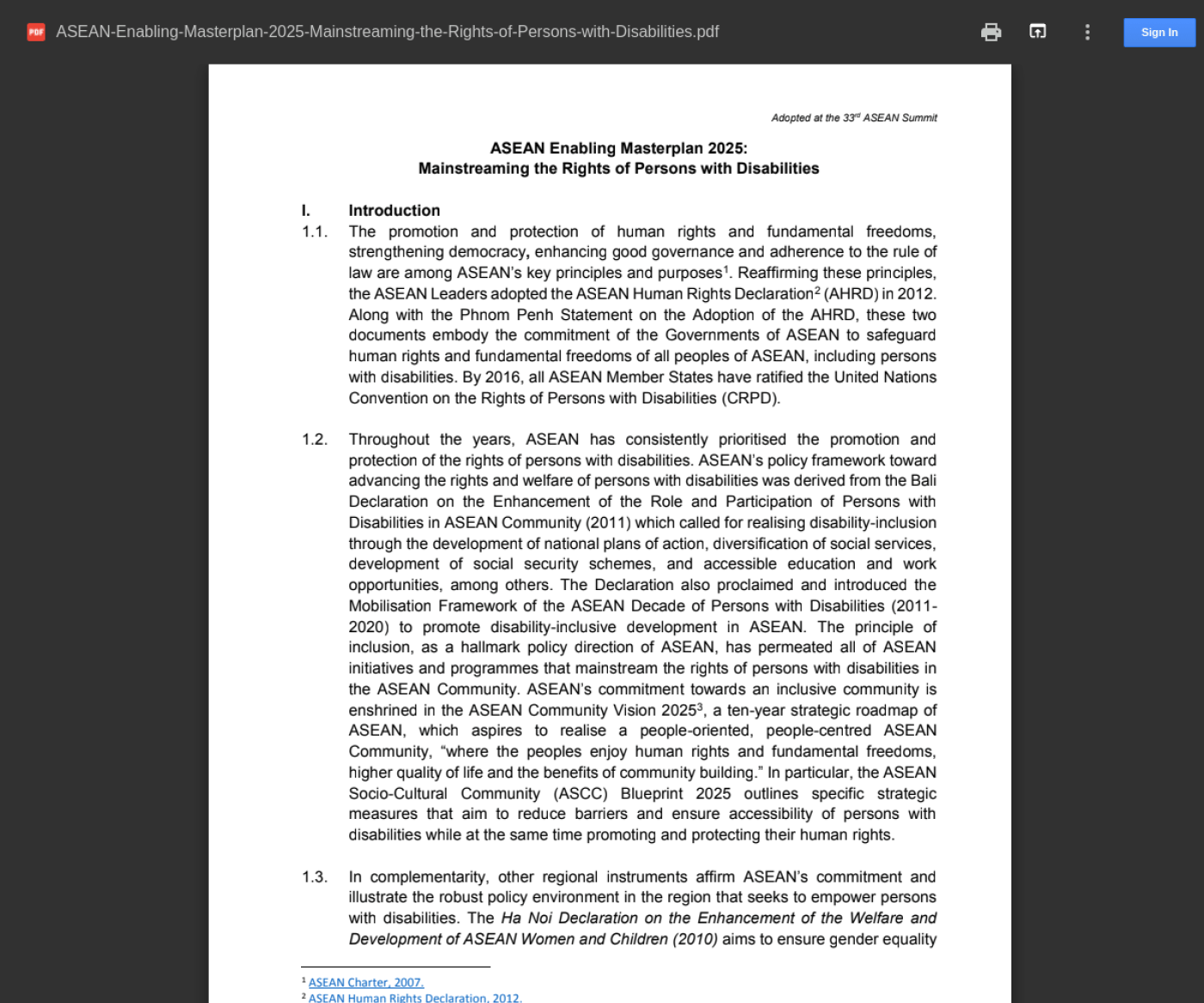
ASEAN master plan through 2025 aimed at mainstreaming the rights of persons with disabilities across the three pillars of the ASEAN Community and guiding policies and programs toward an inclusive community.
ASEAN intergovernmental commission responsible for promoting and protecting human rights in the region, established in 2009 and integrated into ASEAN’s institutional structure.
AU-TI is an online information magazine focused in particular on autism and presented as being produced by autistic people. It publishes articles and resources for the autistic community.
Volume 11 (2023) of the African Disability Rights Yearbook, a peer-reviewed academic journal devoted to disability rights in Africa, published under the auspices of the University of Pretoria’s Centre for Human Rights.
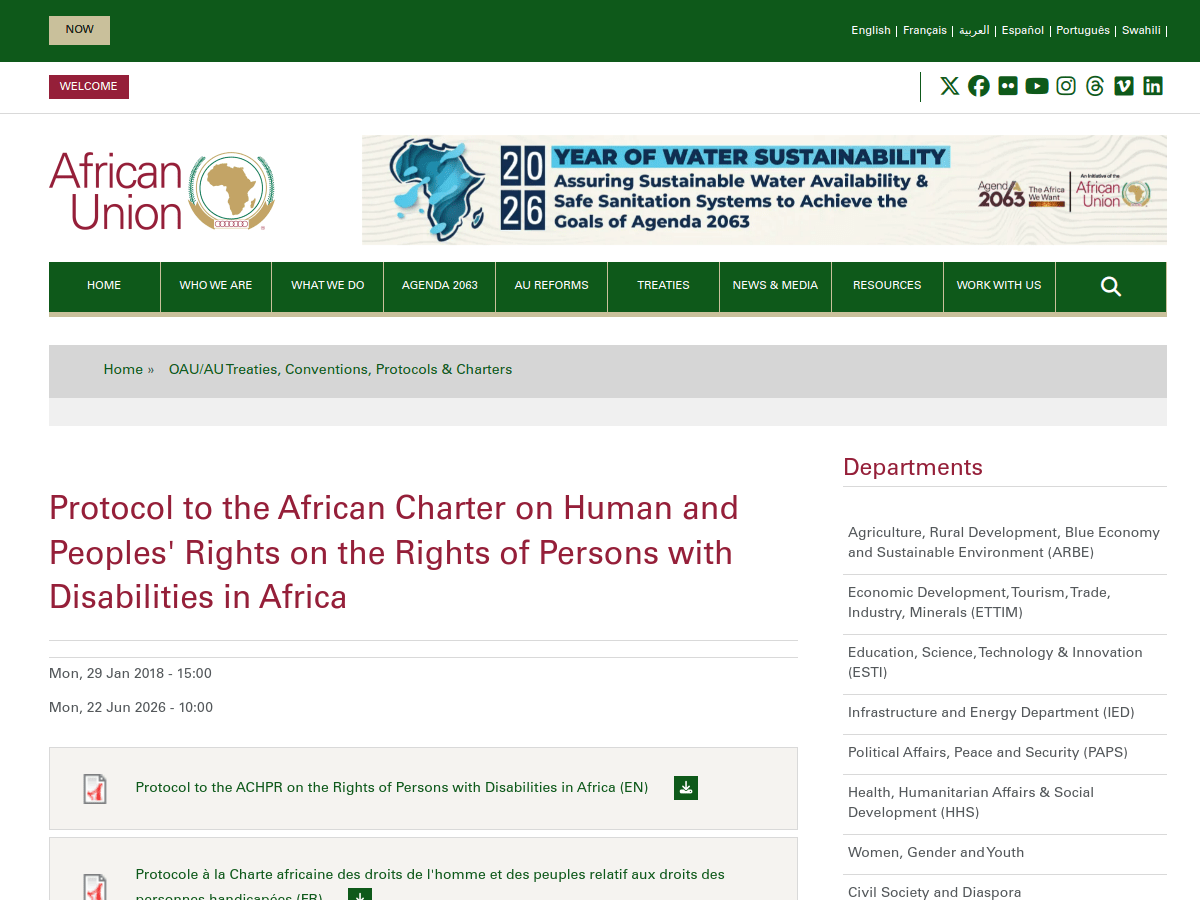
Official website of the African Union, a continental intergovernmental organization bringing together African states and developing common frameworks for cooperation, development and human rights.
Southeast Asian intergovernmental organization created in 1967, devoted to cooperation among its member states and to regional stability, economic development, and social and cultural progress.
International autism awareness website, a project of the Nancy Lurie Marks Family Foundation, presenting personal stories, information and resources from different countries.
Indian platform devoted to autism, offering a directory of resources and professionals as well as information, articles and frequently asked questions about autism.
Indian association of parents and professionals that disseminates autism information and offers, among other things, an international directory of professionals, institutions, associations and resources.
Online directory devoted to autism-related resources, enabling users to search for organizations, services and other resources in this field.
Facebook page of the “Autism in Africa | CRPD” project, devoted to autism in Africa and awareness of autistic people’s rights under the Convention on the Rights of Persons with Disabilities.
Autism Alliance of Canada resource devoted to national autism strategies in different countries and international sharing of experiences on autism-related public policy.
Website “Autisme et Société” devoted to autism and social issues related to autistic people.
International non-profit association based in Brussels, bringing together more than 90 autism organizations from 40 European countries and working for the rights and quality of life of autistic people and their families.
Website of the Autistan Diplomatic Organization, an international organization devoted to relations and dialogue around the needs and rights of autistic people and to its diplomatic and representative activities.
Autistic Minority International is an international autistic self-advocacy organization founded in 2013 as a non-profit association under Swiss law and based in Geneva. It works in particular with the UN, WHO and international human rights mechanisms.
Annual Autscape conference organized by and for autistic people, with presentations, workshops, activities and social spaces centered on the needs and preferences of autistic participants.
C20 (Civil Society) is the civil society engagement group of G20 Social. It brings together civil society organizations and develops recommendations for the G20 process.
United Nations Convention on the Rights of Persons with Disabilities, adopted in 2006 and entered into force in 2008. It establishes an international framework for protecting and promoting the rights of persons with disabilities.
Department of Norway’s Ministry of Culture and Equality responsible for equality and non-discrimination policy, international conventions, international cooperation and several issues related to diversity and cultural policy.
Research chapter published by Springer in 2015 on domestic laws and plans or strategies for protecting the rights of autistic people, with a comparative review of several countries and policies in education and employment in particular.
World Health Organization report published in 2024 on the ethics and governance of artificial intelligence applied to health.
European Council of Autistic People (EUCAP) is a European umbrella organization bringing together national and regional organizations led by autistic people. It promotes their representation, participation in public debate and cross-border cooperation in Europe.
Website of the European Network of (Ex-)Users and Survivors of Psychiatry (ENUSP), a European federation of organizations and people who use or have survived psychiatry, committed to human rights and self-determination.
European network led by disabled people, devoted to independent living, personal assistance, deinstitutionalization, self-determination and participation of persons with disabilities.
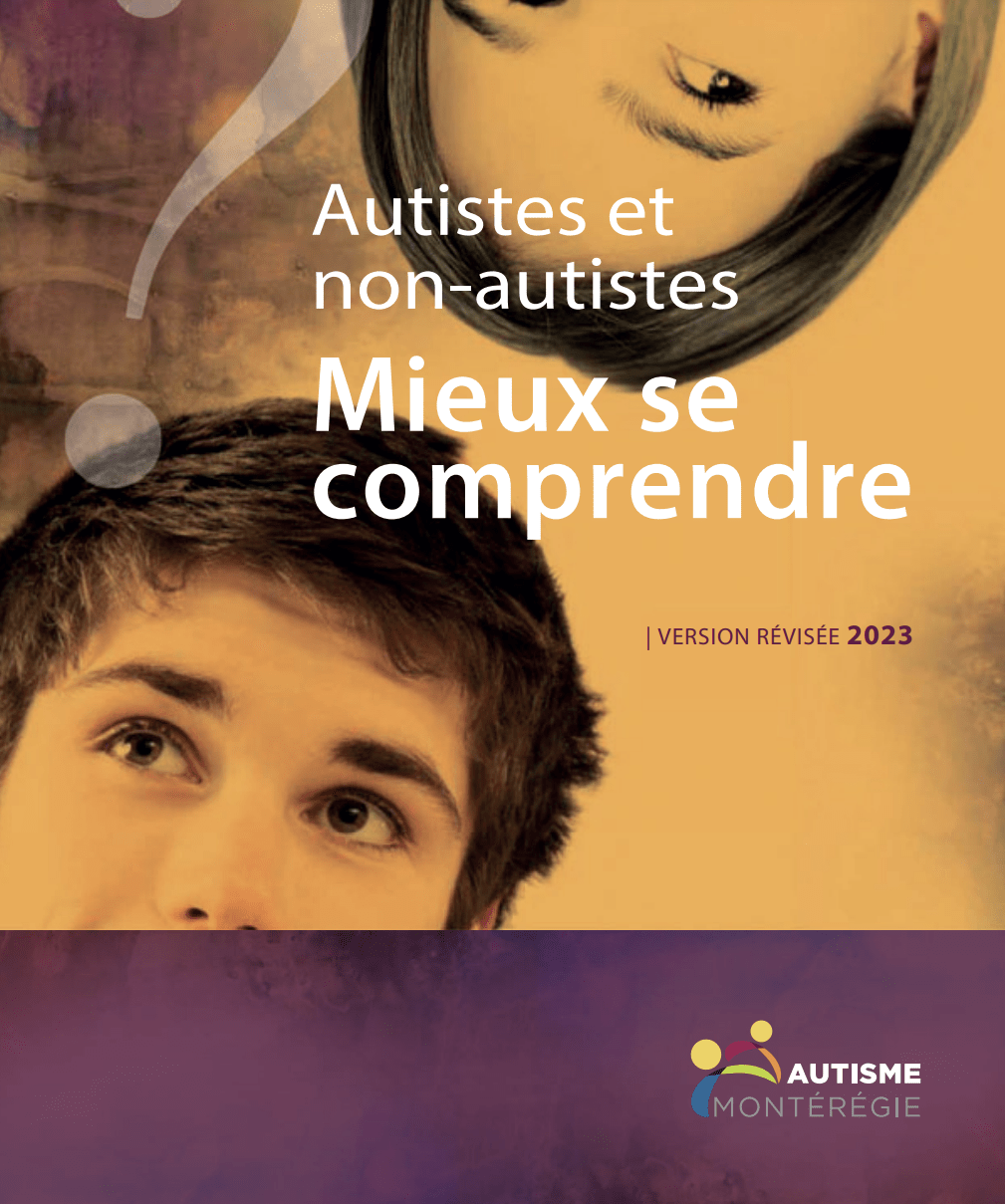
Guide produced by Autisme Montérégie in collaboration with people with autism spectrum disorder. It covers information and sensory processing, communication, social relationships and anxiety, among other topics, to promote better understanding between autistic and non-autistic people.
United Nations Human Rights Committee, a treaty body composed of independent experts responsible for monitoring implementation of the International Covenant on Civil and Political Rights.
Entry in the International Classification of Diseases, 11th Revision (ICD-11), corresponding to code 6A02 “Autism spectrum disorder”. The WHO ICD-11 platform offers multiple interface and browsing languages.
International day observed annually on April 2. The United Nations General Assembly designated the day in 2007 through resolution A/RES/62/139.
U.S.-origin digital platform devoted to autism information, offering videos and resources for families, professionals and educators, with content available notably in English and Arabic.
Study by the French Defender of Rights published in 2016 on the direct effect of provisions of the Convention on the Rights of Persons with Disabilities in the French legal order and their interaction with national, European and international case law.
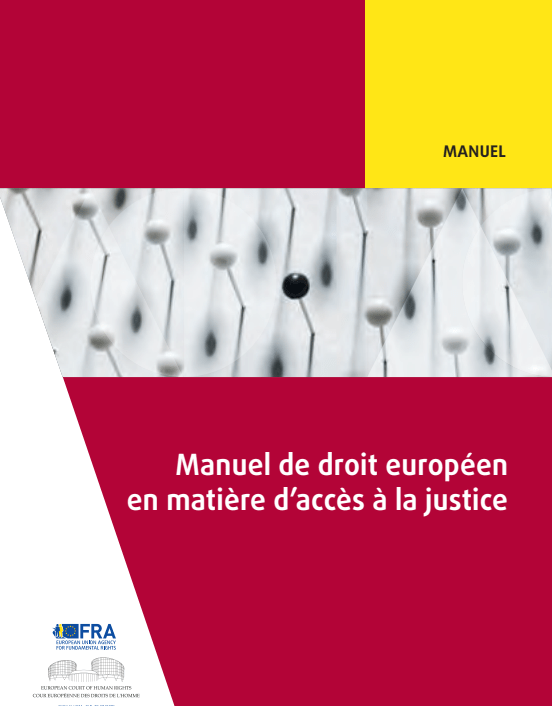
Joint handbook of the European Union Agency for Fundamental Rights and the Council of Europe, published in 2016, presenting key European principles on access to justice in civil and criminal matters.
The World Health Organization (WHO) is a specialized agency of the United Nations responsible for global public health. Its institutional website publishes content and documents in its six official languages: Arabic, Chinese, English, French, Russian and Spanish.
Protocol to the African Charter on Human and Peoples’ Rights on the Rights of Persons with Disabilities in Africa, adopted by the African Union in 2018 and entered into force in 2023.
Report of the Council of Europe Commissioner for Human Rights following his visit to France from September 22 to 26, 2014, addressing several human rights issues, including the situation of persons with disabilities.
2016 report of the United Nations Special Rapporteur on the rights of persons with disabilities, presented to the Human Rights Council as A/HRC/31/62.
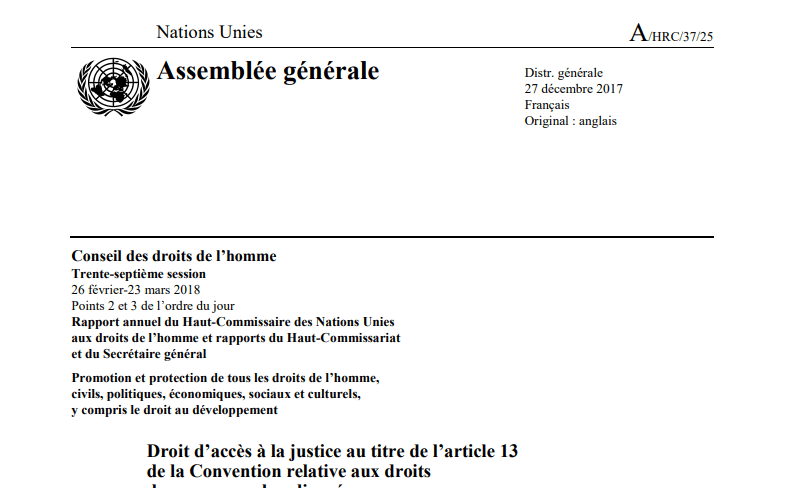
2017 report of the Office of the United Nations High Commissioner for Human Rights on the right of access to justice for persons with disabilities under Article 13 of the Convention on the Rights of Persons with Disabilities.
Good practice recommendation adopted by the French National Authority for Health in March 2012 with Anesm on coordinated educational and therapeutic interventions for children and adolescents with autism or other pervasive developmental disorders. It notably promotes personalized, comprehensive and coordinated interventions.
World Health Assembly Resolution WHA67.8, adopted on May 24, 2014, on comprehensive and coordinated efforts concerning autism spectrum disorders. It calls on states in particular to strengthen policies, services, research and action against stigma.
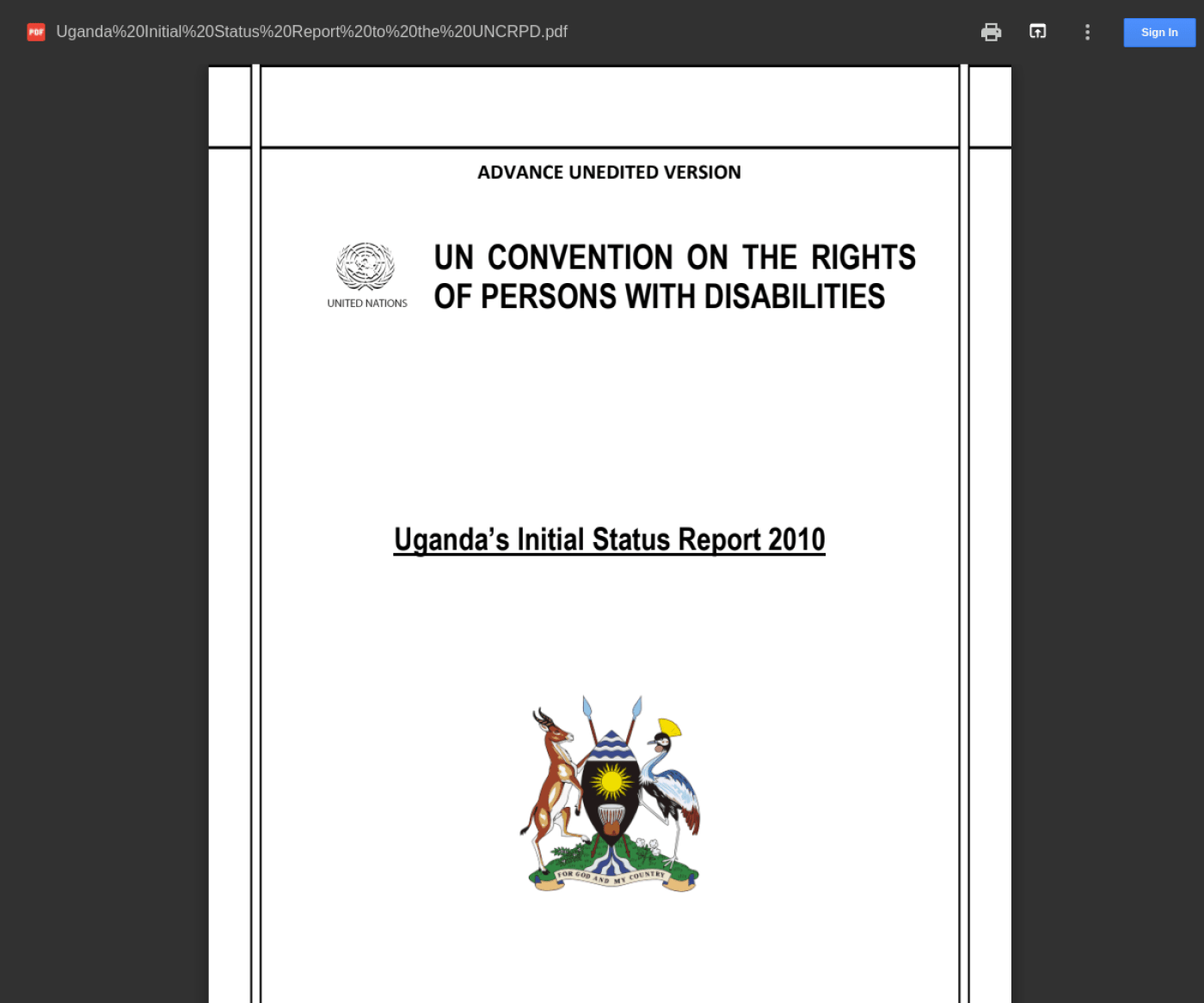
Initial report submitted by the Ugandan state to the United Nations Committee on the Rights of Persons with Disabilities under the Convention on the Rights of Persons with Disabilities.
Website of the Union of International Associations (UIA), an organization and resource center providing information and data on international associations and organizations.
Report of the United Nations Special Rapporteur on the rights of persons with disabilities on her visit to France from October 3 to 13, 2017, published as A/HRC/40/54/Add.1 in 2019.
French-language Wikipedia article about the autism rights movement, its history, self-advocacy, neurodiversity and the debates surrounding it.
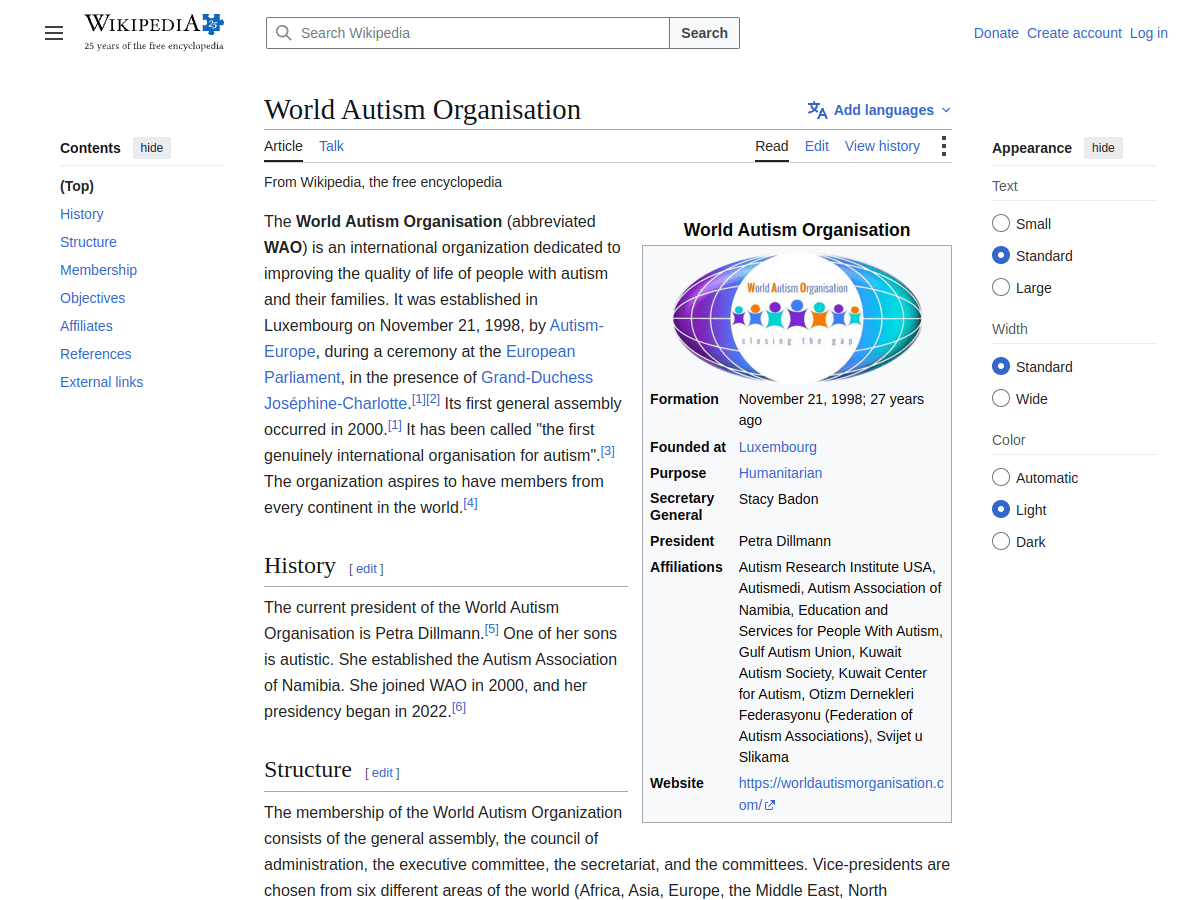
Wikipedia page about the World Autism Organisation, an international organization founded in Luxembourg in 1998 and dedicated to improving the quality of life of autistic people and their families.
World Health Organization information page on autism.
Website of the World Network of Users and Survivors of Psychiatry (WNUSP), an international organization led by users and survivors of psychiatry and engaged in defending the human rights of people with psychosocial disabilities.
Worldwide Autists is an international WhatsApp community intended in particular for autistic adults. The website lists language groups in Spanish, Portuguese, French, German, Italian and Russian and members across several regions of the world.
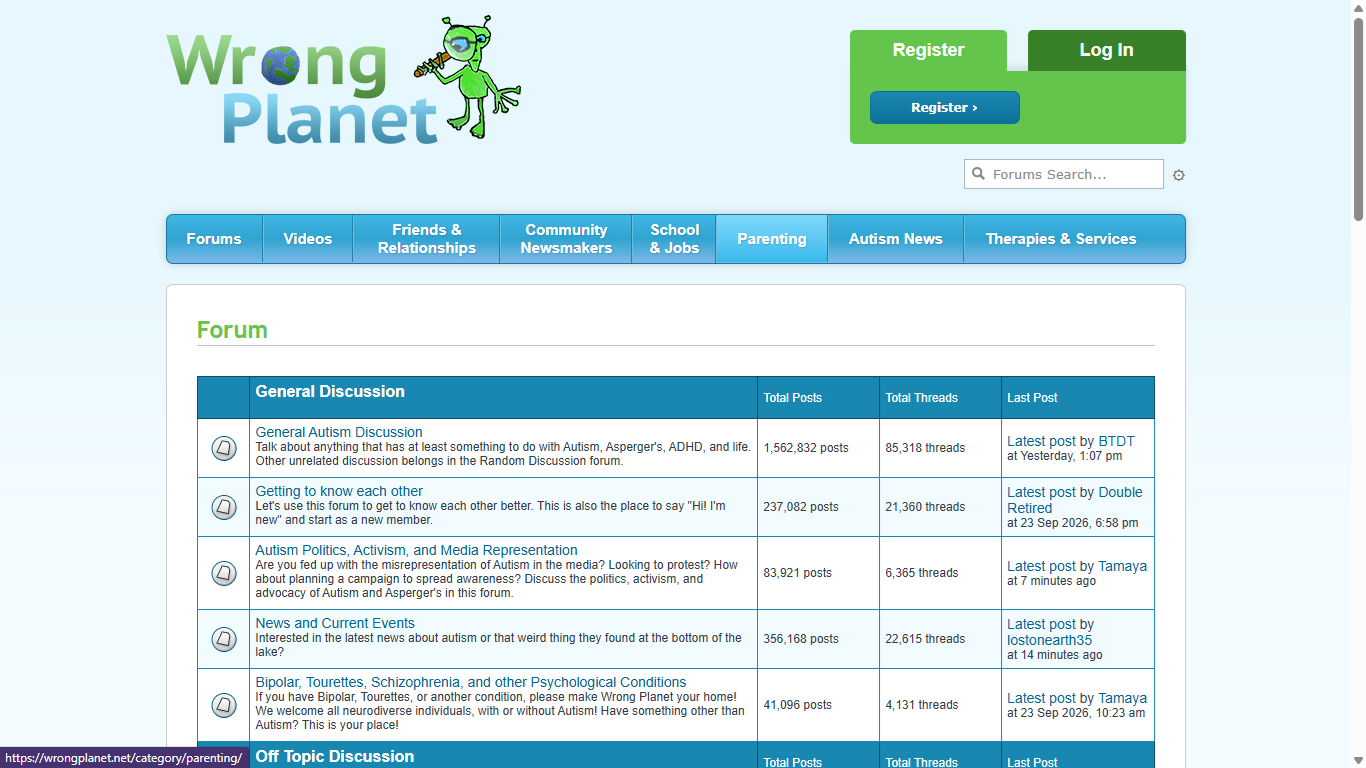
Wrong Planet is an international online community created for autistic people, people with Asperger syndrome, family members, professionals, and people interested in better understanding autism. The platform provides discussion forums where users can share experiences, exchange information, discuss autism-related topics, and participate in a global network of interaction. Created in 2004, Wrong Planet has become one of the largest online spaces for discussions about autism, with a particular focus on communication among autistic people and the sharing of personal experiences. The forums cover many topics, including daily life, social relationships, education, work, specific interests, diagnosis, neurodiversity, and issues related to the autistic community. The platform functions mainly as a community-based and collaborative space, allowing members to post messages, ask questions, find peer support, and take part in international discussions on different aspects of autism.
Spanish-language Telegram group “Autistas Adultes” intended for exchanges among autistic adults.
Practical guide by Jean-Philippe Piat, himself autistic, published by AFD in 2018, offering tools and information on daily life, executive functions, social skills, stress and other aspects of autistic people’s lives.
French translation of Marc Segar’s guide offering practical advice drawn from his personal experience to help autistic people understand and manage various social and everyday situations.
Official World Health Organization fact sheet on autism, presenting key facts, general information and the WHO response. The page was updated on September 17, 2025.
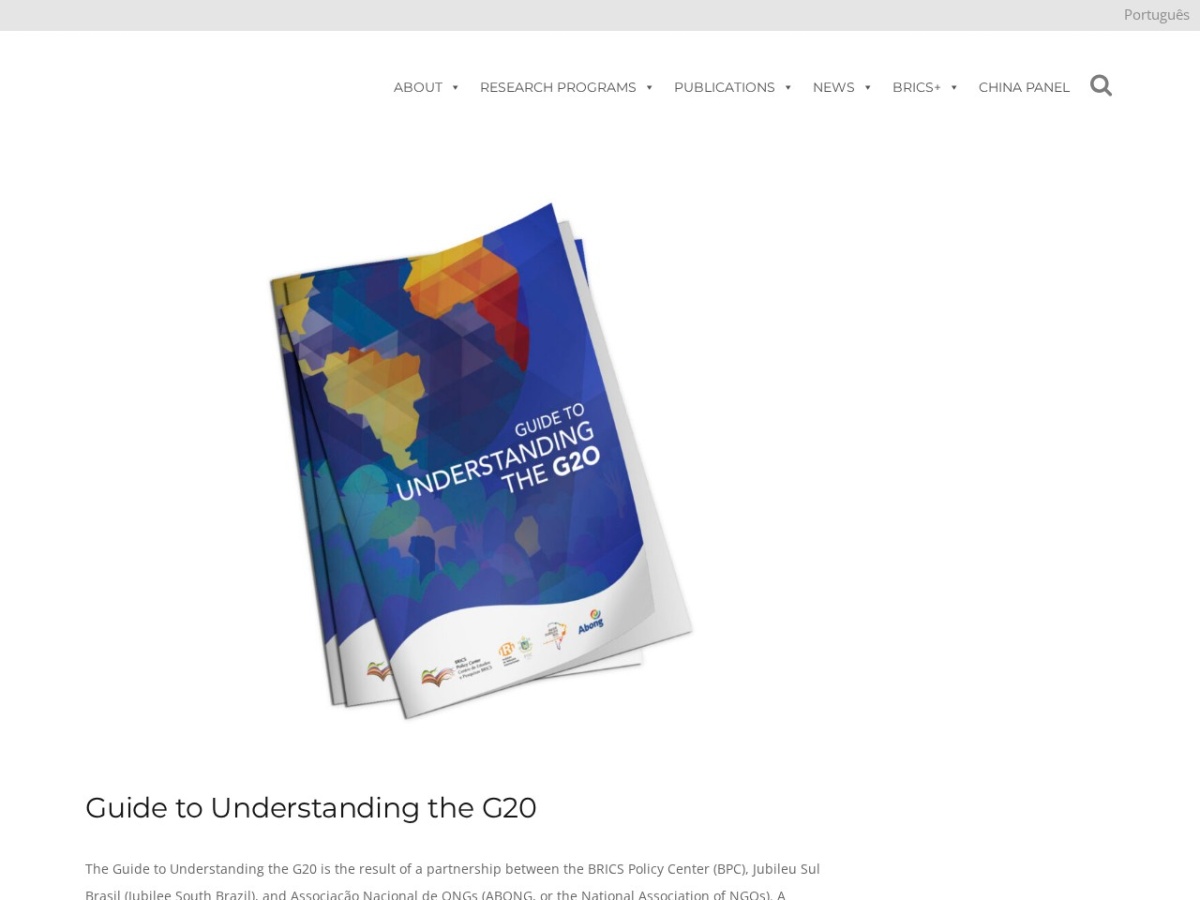
Guide produced in 2024 by the BRICS Policy Center with Jubileu Sul Brasil, ABONG and other civil society organizations to explain how the G20 works and its dynamics during Brazil’s G20 presidency.
Statement delivered in 2023 by Irène Esambo Diata, Minister Delegate of the Democratic Republic of the Congo responsible for persons with disabilities and other vulnerable persons, at the Conference of States Parties to the Convention on the Rights of Persons with Disabilities.
Research paper published by Amaze in 2021 to inform Australian thinking on a national autism strategy through international comparisons.